
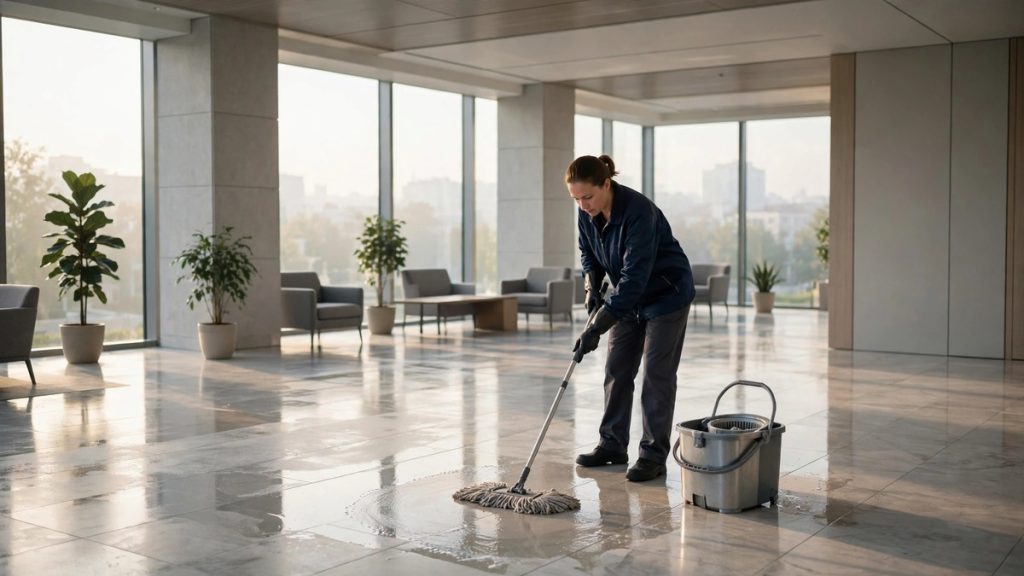
Cleaner Jobs in Canada: Pay, Duties & How to Apply
Cleaner jobs in Canada cover offices, schools, hospitals, hotels, and malls, and most need no licence or prior experience — just reliability and the ability to do physical work on your feet. The national median wage is $20.00 an hour. This guide covers duties, pay, shifts, safety training, and how to apply.
Key Takeaways
– Job Bank lists light duty cleaners under NOC 65310, with a national median wage of $20.00 an hour (low $16.20, high $26.00, 2024–2025 data updated November 2026).
– Janitors and heavy-duty cleaners fall under a separate code, NOC 65312, covering heavier equipment and outdoor work.
– Most cleaning jobs need no formal education or licence. Employers hire for reliability, physical stamina, and the ability to follow safety instructions.
– Evening and night shifts are common, because much cleaning happens after the building empties. Ask about shift patterns before you accept.
– WHMIS training — the system for safe handling of chemicals — is required or expected in most cleaning jobs. It is short, often free through the employer, and worth having before you apply.
Cleaner jobs in Canada: what the work actually is
A light duty cleaner cleans offices, corridors, rooms, and public facilities: sweeping, mopping, vacuuming, dusting, washing washrooms, emptying bins, and restocking supplies. Job Bank puts the occupation under NOC 65310, light duty cleaners. The job title on the posting — cleaner, janitor, custodian, housekeeper, environmental services worker — tells you less than the task list does. A hospital environmental services worker and a hotel housekeeper share the same broad occupation, but their days look very different: one follows infection-control procedures in patient areas, the other turns over rooms on a tight schedule between check-out and check-in. The hospital side overlaps with health support work — see our guide to personal support worker jobs for the care roles that share those wards. Read the tasks.
A typical shift in office cleaning starts after the building empties. You collect supplies from the janitor’s closet, work through a floor plan — washrooms first, then kitchens and meeting rooms, then desks and floors — and sign off each area. In a school, the shift often runs late afternoon into the evening, covering classrooms, gyms, and washrooms. In a hospital, cleaning runs around the clock, with strict procedures for each area and protective equipment for higher-risk zones. In a hotel, housekeeping runs during the day, room by room, against a daily quota. The work is physical throughout: standing, walking, bending, lifting, and repeating the same motions for a full shift. If you have never done physical work for eight hours, the first two weeks will test you — and then your body adjusts.
Janitors and heavy-duty cleaners, under NOC 65312, do the heavier end of the work: operating floor machines and carpet cleaners, cleaning building exteriors, clearing snow, handling waste and recycling, and doing minor maintenance such as changing light bulbs. The outdoor and site side of that work overlaps with entry-level site roles — see our guide to construction labourer jobs. These roles more often ask for experience with specific machines, and they more often involve outdoor work in all weather. If a posting mentions ride-on scrubbers, pressure washers, or snow removal, you are looking at the heavy-duty end, and the pay usually reflects it.
Pay: the Job Bank figures and how offers compare
Job Bank’s wage report for cleaners, updated 18 November 2026 with 2024–2025 Labour Force Survey data, lists a national low of $16.20, a median of $20.00, and a high of $26.00 an hour for light duty cleaners. Regional medians run higher in the north and in Quebec: Yukon $24.22, Nunavut $22.00, Quebec $21.00. A median of $20.00 means half of workers in the survey earned more and half earned less. It is not a promise — your wage is the number on your offer letter, and cleaning pay varies by employer, setting, shift, and union coverage. Unionized hospital and school-board cleaning jobs typically pay above the median, with benefits; contract cleaning companies, which employ many office cleaners, typically pay closer to the provincial minimum wage.
Do the arithmetic before you accept. At the national median of $20.00, a 40-hour week pays $800.00 before tax, and a full year at 40 hours is about $41,600 — but many cleaning jobs are part-time or split-shift, and the hours on the posting are the hours that count. A posting at $22 an hour for 20 hours a week pays less than a posting at $19 an hour for 40 hours. Ask three questions at the interview: how many hours per week are guaranteed, what the shift pattern is, and whether the role is permanent, seasonal, or on-call. Get the answers in writing on the offer letter.
One caution on wage figures in guides, including this one: Job Bank’s historical low of $16.20 can fall below a province’s current legal minimum wage, because the data covers 2024–2025 and minimum wages have risen since. Your employer must pay at least the current provincial minimum wage for the province where you work. If an offer quotes a wage below the current minimum, that is a red flag — check the current minimum on your province’s employment standards site.
Shifts, settings, and what to ask before you accept
Cleaning work follows the building’s rhythm, not yours. Office cleaning is mostly evenings and nights. School cleaning is late afternoons and evenings, with summer deep-cleaning periods. Hospital cleaning runs 24 hours, with nights and weekends on rotation. Hotel housekeeping is daytime, with weekend work standard. Retail and mall cleaning is early mornings or late evenings. Before you accept any role, ask for the exact shift pattern, the weekend rotation, and how much notice you get for schedule changes. A job you cannot reach by transit at 11 p.m. is not a job — check the bus route for the shift you would actually work, not the daytime route.
Ask about supplies and equipment too. A legitimate employer provides the cleaning chemicals, tools, and protective equipment — gloves, and masks or eye protection where the chemicals require them. You should never have to buy your own chemicals or pay for your own uniform as a condition of being hired. Ask what training is provided: WHMIS, safe lifting, and site-specific procedures should all be covered before your first solo shift, on paid time.
The work has real health and safety content. Cleaning chemicals can burn skin, damage eyes, and harm lungs if mixed or used wrong. Never mix bleach with ammonia or acids — the gases can kill. Follow the product label and the safety data sheet for every chemical you use, wear the protective equipment the task requires, and tell your supervisor immediately if you feel unwell. WHMIS — the Workplace Hazardous Materials Information System — is the national system of labels, safety data sheets, and worker training for hazardous products. Most cleaning employers provide WHMIS training on hire; having a WHMIS certificate before you apply, available through low-cost online courses, makes your application stronger.
How to apply, and how to spot the scams
Most cleaning jobs need no formal education. Postings commonly list no degree or diploma, and say training is provided. What employers ask for, consistently, is reliability, physical stamina, and the ability to follow instructions in English or French well enough to read safety labels and communicate with a supervisor. A food handler certificate is not needed for cleaning, but first aid training and a WHMIS certificate help. If you hold either, put it near the top of your resume.
Search Job Bank for “cleaner,” “janitor,” “custodian,” or “housekeeper” with your city, and read the full posting: tasks, wage, hours, location, and shift pattern. Our guide to searching and applying on Job Bank shows the filters. Then check employer sites directly: hospitals and health authorities, school boards, hotel chains, and the large contract cleaning companies all post on their own careers pages. Apply with a one-page resume naming the physical work you have done, any cleaning or housekeeping experience, your availability for evenings and weekends, and any safety training you hold.
Watch for scams, because cleaning jobs are a common lure. A real employer never asks you to pay for a job, a uniform, training, a background check, or a work permit as a condition of hiring. Ads promising high wages, free housing, and a visa, sent through WhatsApp with a personal email address, are scams until proven otherwise. Our guide to job scams in Canada lists the warning signs in full. Verify every offer on the employer’s own careers page before you share personal documents or travel anywhere.
Frequently Asked Questions
Do cleaner jobs in Canada need experience or a licence?
Most do not. Postings commonly ask for no formal education and no prior experience, with training provided. What matters is reliability, physical stamina, and the ability to follow safety instructions. WHMIS training and first aid are advantages, and heavy-duty roles may ask for experience with floor machines or outdoor equipment.
How much do cleaners earn in Canada?
Job Bank lists a national median of $20.00 an hour for light duty cleaners (low $16.20, high $26.00), based on 2024–2025 data updated in November 2026. Pay varies by setting and union coverage: hospital and school-board roles typically pay above the median, while contract office cleaning typically pays closer to the provincial minimum wage. Check the hours, not just the rate — part-time at a high rate can pay less than full-time at a lower one.
What shifts do cleaners work in Canada?
It depends on the setting. Office cleaning is mostly evenings and nights, school cleaning is late afternoons and evenings, hospital cleaning runs around the clock, and hotel housekeeping is daytime with weekend work. Ask for the exact shift pattern, weekend rotation, and schedule-change notice before you accept, and check transit for the shift you would actually work.
Is WHMIS training required for cleaning jobs in Canada?
WHMIS training is required or expected in most cleaning jobs, because cleaners handle hazardous chemicals. Most employers provide it on hire, on paid time. Having a WHMIS certificate before you apply strengthens your application. Never mix cleaning chemicals — bleach mixed with ammonia or acids produces gases that can kill — and always follow the product label and safety data sheet.
Sources
- Job Bank, Cleaner in Canada, wages: https://www.jobbank.gc.ca/marketreport/wages-occupation/14306/ca
- Government of Canada, Job Bank: https://www.jobbank.gc.ca/
Never pay anyone for a job, LMIA or a visa. Real Canadian employers never charge workers a fee.




Leave a Reply
You must be logged in to post a comment.